
HGH for Women


Growth hormone matters for women just as much as for men—yet women often overlook HGH when thinking about hormone health, focusing instead on estrogen and progesterone. The reality is that HGH decline in women contributes to fatigue, weight gain, muscle loss, skin aging, and reduced sexual desire. Understanding growth hormone’s role in female health can open doors to feeling vital again.
This guide covers why HGH matters for women, how menopause affects it, and whether HGH therapy might benefit you.
Why Growth Hormone Matters for Women
Women’s bodies are deeply affected by HGH throughout life:
- Metabolic health: HGH accelerates fat burning and maintains healthy body composition. Low HGH makes weight management harder despite diet and exercise.
- Muscle and bone strength: HGH maintains muscle mass and bone density. As HGH declines, muscles weaken and osteoporosis risk increases—critical for women approaching and in menopause.
- Skin health: HGH promotes skin thickness, elasticity, and collagen production. Deficiency accelerates skin aging, wrinkles, and poor healing.
- Energy and mood: HGH drives vitality and emotional well-being. Low HGH contributes to fatigue, depression, and anxiety.
- Sexual function: HGH supports sexual desire and satisfaction. Deficiency can reduce libido and sexual enjoyment.
- Cardiovascular health: HGH protects heart health and blood vessel function. Deficiency increases cardiovascular disease risk.
- Cognitive function: HGH supports memory, focus, and mental clarity. Low HGH can cause brain fog and cognitive decline.
- Immune function: HGH strengthens immunity, helping women resist infection and recover from illness.
For women, especially those approaching or in menopause, optimizing HGH levels can be transformative.
How HGH Changes During Menopause
Menopause brings dramatic hormonal shifts, and growth hormone is one of the casualties:
- Before menopause: A woman’s HGH levels follow a pattern driven by estrogen. Estrogen supports growth hormone secretion.
- During perimenopause: As estrogen fluctuates, HGH levels become erratic. Some days it’s adequate; other days it drops significantly.
- After menopause: With estrogen at low levels, HGH production often stabilizes at a lower baseline. Many postmenopausal women have low HGH levels.
- Combined effect: The loss of estrogen AND the decline in HGH together create a “double hit” of hormonal deficiency, explaining why women often feel so different after menopause.
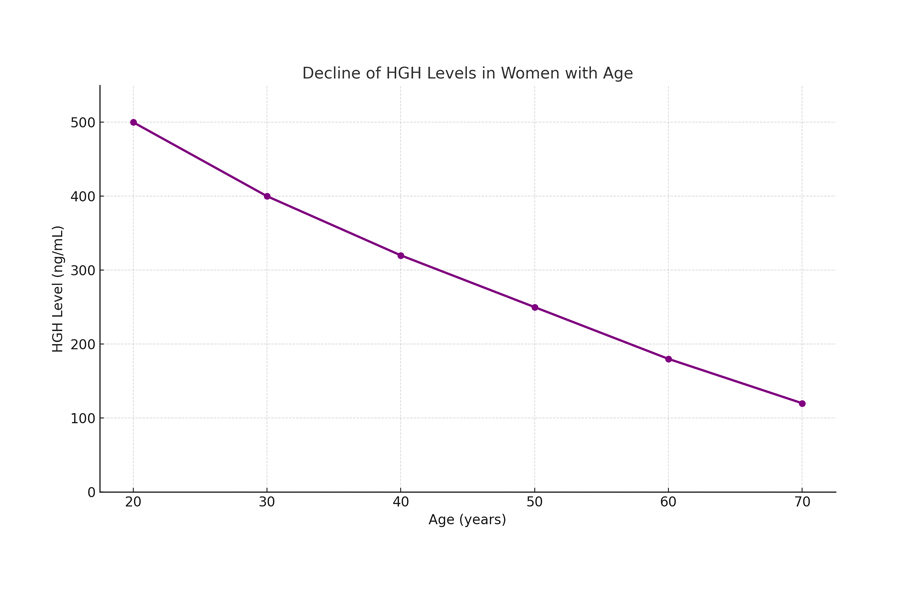
This is why hormone replacement therapy for women often addresses both estrogen/progesterone AND growth hormone. For more on how menopause affects HGH, see our guide on HGH and menopause.
Signs of GH Deficiency in Women
If you’re experiencing these symptoms, growth hormone deficiency might be contributing:
- Persistent fatigue: Exhaustion that doesn’t improve with sleep; feeling like your battery doesn’t charge.
- Weight gain (especially visceral fat): Belly fat and weight gain despite reasonable diet and exercise.
- Loss of muscle tone: Muscles feel weak; loss of firmness in arms, legs, and core despite exercise.
- Thin, aging skin: Loss of skin thickness and elasticity; accelerated wrinkles; poor wound healing.
- Joint and muscle aches: General achiness; pain with exercise; slow recovery from workouts.
- Low libido: Reduced sexual desire and satisfaction.
- Mood disturbances: Depression, anxiety, irritability; loss of joy.
- Brain fog and poor memory: Difficulty concentrating, forgetfulness, slower thinking.
- Thinning hair: Hair becomes finer, grows more slowly.
- Night sweats and hot flashes: (These are often due to estrogen loss, but HGH deficiency can worsen them.)
- Reduced exercise tolerance: Workouts feel harder; recovery is slower.
- Weak nails: Brittle nails that break easily.
Many of these symptoms are attributed to menopause and aging, but growth hormone deficiency may be the underlying cause.
Benefits of HGH Therapy for Women
- Restored energy
- Loss of stubborn belly fat
- Improved muscle tone
- Dramatically improved skin quality
- Better mood and emotional well-being
- Enhanced sexual function
- Stronger bones (critical for postmenopausal women)
- Better sleep quality
For many women, HGH therapy is transformative during and after menopause, restoring the vitality and appearance they felt before hormone decline.
For a complete breakdown of HGH benefits and when to expect them, see our guide on benefits of HGH therapy.
HGH as Part of Female HRT
While estrogen and progesterone are the focus of most female hormone replacement therapy, comprehensive HRT often includes HGH for optimal results:
- Estrogen: Restores sexual function, bone health, cardiovascular protection, and mood. See our guide on estrogen replacement therapy.
- Progesterone: Provides mood support, sleep improvement, and protective effects. See our guide on progesterone replacement therapy.
- HGH: Supports metabolism, muscle and bone health, energy, skin quality, and recovery.
When combined, these three hormones create a synergistic effect that addresses the full spectrum of menopause symptoms and age-related decline. Your doctor can assess which hormones you need based on your individual testing and symptoms.
Risks and Side Effects for Women
HGH therapy is generally safe for women with documented deficiency. Common mild side effects include joint aches, fluid retention, and injection site reactions—most of which resolve within 2-4 weeks. Serious side effects are rare with appropriate dosing and monitoring. For detailed information on all potential side effects and how they’re managed, see our side effects guide.
How Women Get Started with HGH Therapy
If you think HGH therapy might benefit you, here’s the process:
- Consultation: Schedule a consultation with a National HRT doctor experienced with female hormone therapy.
- Blood work at a partner lab: We schedule your blood work at one of our partner laboratories close to your location—IGF-1, estrogen, progesterone, metabolic markers, and other relevant hormones.
- Discuss your symptoms: Be open about fatigue, weight gain, skin changes, mood, sexual function, and other concerns.
- Receive diagnosis: If IGF-1 is low and symptoms match, our doctor diagnoses growth hormone deficiency.
- Plan treatment: Our doctor explains HGH therapy, expected benefits, side effects, costs, and whether combining with estrogen/progesterone is appropriate.
- Receive HGH: If you qualify, the prescription is sent directly to a licensed pharmacy. FDA-approved HGH is shipped to your home, along with injection training.
- Monitor progress: Follow-up blood work at 6–8 weeks and periodically thereafter ensures safe, effective therapy.
FAQs
Does menopause affect growth hormone levels?
Yes. During perimenopause, HGH levels become erratic as estrogen fluctuates. After menopause, with estrogen low, many women have lower HGH levels. This contributes significantly to postmenopausal weight gain, fatigue, skin aging, and loss of muscle tone. Addressing both estrogen AND growth hormone can produce better results than estrogen alone.
Can HGH therapy help with menopause symptoms?
HGH therapy directly addresses some menopause symptoms (fatigue, weight gain, muscle loss, skin aging, mood disturbance) but not others (hot flashes, night sweats are primarily estrogen-related). For comprehensive menopause symptom relief, most women benefit from both estrogen/progesterone AND HGH therapy, as they target different aspects of hormonal deficiency.
Is HGH safe for women?
Yes, HGH therapy is safe for women with documented growth hormone deficiency when properly prescribed and monitored by a qualified doctor. Like all hormones, it can have side effects, but serious complications are uncommon. Regular blood work and doctor oversight ensure safety. The benefits for many women far outweigh the minimal risks.
Should women take HGH with estrogen?
Not all women need both—it depends on your individual lab results and symptoms. If you’re deficient in both hormones, combining them often produces superior results because they work synergistically. Your doctor will assess whether you need HGH, estrogen, both, or neither based on your IGF-1, estrogen levels, and symptoms. Many postmenopausal women benefit from comprehensive hormone replacement including both.
Can HGH help women lose weight after menopause?
Yes. If your weight gain is related to HGH deficiency, therapy can help normalize metabolism, reduce visceral fat, and restore muscle tone. Combined with healthy diet and regular exercise, HGH therapy can support significant, sustained weight loss in women with deficiency. However, HGH alone won’t produce results without lifestyle support; it works best as part of a comprehensive health approach.
Medical Disclaimer: The information on this page is for educational purposes only and is not intended as medical advice, diagnosis, or treatment. Always consult a qualified healthcare provider before starting, stopping, or changing any hormone therapy or medication. Individual results vary, and treatment decisions should be made between you and your doctor based on your specific medical history and needs.
 National HRT Staff
Please note that the information provided in this article is for informational purposes only and is not intended as a substitute for professional medical advice, diagnosis, or treatment. Always seek the advice of your physician or other qualified healthcare provider with any questions you may have regarding a medical condition or treatment.