
Treatment for Testosterone Deficiency: Your Options Explained

The short version:
- There are three main low testosterone treatment paths: testosterone replacement therapy (TRT), lifestyle changes, and treating the underlying condition — most people use a combination.
- TRT is the most effective option for confirmed deficiency that lifestyle changes can’t fix; it comes as injections, gels, patches, or pellets.
- The largest safety trial to date (TRAVERSE, 2023) found TRT did not increase major heart events in men with confirmed low testosterone.
- Expect mood and energy to improve first (weeks), with muscle, body composition, and sexual function following over 3–12 months.
You’ve been diagnosed with low testosterone. You’ve got your lab results, you understand your symptoms, and now you’re asking the question that matters most: “What do I do about it?”
The answer isn’t one-size-fits-all. The right low testosterone treatment depends on what’s causing the deficiency, how severe it is, your age, your overall health, and your personal goals. Some people resolve Low T through lifestyle changes alone. Others need hormone replacement therapy. Most benefit from a combination approach.
This page breaks down every option, what to expect from each, and how to work with your doctor to create a plan that gets you feeling like yourself again.
Treatment Starts with a Proper Diagnosis
Because the cause determines the treatment — you can’t pick the right path until you know exactly what you’re dealing with. Your diagnosis tells your doctor:
- Whether you truly have low testosterone (not every fatigue or mood issue is hormonal)
- How low your levels actually are, and your baseline before treatment
- Whether it’s primary hypogonadism (a testicular issue) or secondary (a signaling issue in the brain)
- Whether other hormonal or health issues are contributing
If you haven’t been tested yet, that’s the essential first step — our testosterone testing guide explains the process and what to expect. And if you want to understand what might be driving your deficiency in the first place, see what causes low testosterone.
Your Low Testosterone Treatment Options
The three main paths are TRT, lifestyle changes, and treating the underlying condition — and they’re not mutually exclusive. Here’s how they compare:
| Treatment Path | Best For | What to Expect |
|---|---|---|
| Testosterone replacement therapy (TRT) | Confirmed deficiency with symptoms, especially primary hypogonadism or causes that can’t be reversed | Most reliable symptom relief; first improvements in 4–6 weeks; usually a long-term commitment with regular monitoring |
| Lifestyle changes | Mild deficiency driven by weight, sleep, stress, alcohol, or inactivity | Can restore levels naturally in the right cases; takes months of consistency; also amplifies TRT results |
| Treating the underlying condition | Low T caused by sleep apnea, diabetes, obesity, a medication, or a pituitary problem | Fixing the root cause can normalize levels without hormones; sometimes combined with TRT while it takes effect |
Testosterone Replacement Therapy (TRT)

For many men and some women with confirmed deficiency, TRT is the most effective low testosterone treatment: it restores levels to the healthy range, typically relieving symptoms and improving quality of life significantly. The Mayo Clinic’s overview of testosterone therapy gives a balanced summary of the benefits and trade-offs.
Who benefits from TRT?
- Men with documented low testosterone and symptoms
- Men with primary hypogonadism, where lifestyle changes alone can’t restore production
- Men with secondary hypogonadism whose underlying cause can’t be fully resolved
- Women with low testosterone affecting sexual function, energy, or well-being
- Transgender men and non-binary individuals affirmed on testosterone therapy
Important note: TRT is typically a long-term commitment. If your Low T stems from a reversible cause (obesity, sleep deprivation, severe stress), fixing that cause might eventually let you stop. If it’s age-related or due to a permanent testicular issue, TRT becomes part of ongoing health management — similar to taking blood pressure medication.
For the full mechanics — dosing, monitoring, and how therapy is managed month to month — see our comprehensive testosterone replacement therapy page.
Forms of Testosterone: Injections, Gels, Patches, and Pellets
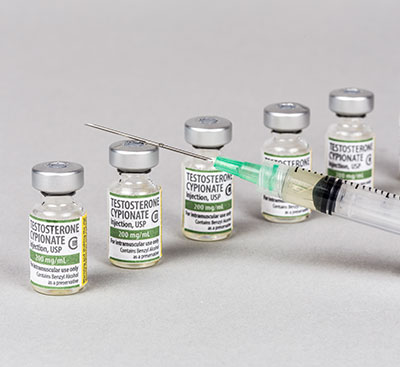
Testosterone can be delivered in four main forms, and your doctor will recommend the one that fits your lifestyle, preferences, and medical situation best. Here’s how they compare:
| Form | How it’s used | Typical rhythm | Trade-offs |
|---|---|---|---|
| Injections | Injected into muscle (intramuscular) or under the skin (subcutaneous) | Usually weekly or every two weeks | Cost-effective and highly reliable; many people prefer the less frequent schedule |
| Gels and creams | Applied to the skin | Daily | Convenient; small risk of transfer to others through skin contact; women sometimes prefer them for lower dosing |
| Patches | Worn on the skin | Steady release while worn | Discreet; some people experience skin irritation |
| Pellets | Implanted under the skin in a minor procedure | Steady release for 3–6 months | “Set it and forget it” convenience; requires a minor procedure to place |
A fifth option, oral testosterone, is less commonly used due to more variable absorption; injections or topical forms are usually preferred.
Injections are the most widely used option — our testosterone injections page compares them with the other methods in detail.
The Safety Record of Low Testosterone Treatment
For men with properly diagnosed deficiency, the best current evidence is reassuring. The TRAVERSE trial — the largest testosterone safety study to date, published in the New England Journal of Medicine in 2023 — followed over 5,000 men with confirmed hypogonadism and found that TRT did not increase major cardiac events, addressing a long-standing concern about heart safety.
That said, TRT is real medicine, not a supplement, and it isn’t for everyone. The Endocrine Society’s clinical practice guideline recommends against testosterone therapy in men with prostate cancer, men actively planning to conceive (TRT suppresses sperm production), and men with untreated severe sleep apnea, among other situations.
A responsible workup also looks well beyond one hormone: a full blood panel (blood counts, metabolic and thyroid markers, PSA where appropriate) plus a physical exam, because many conditions can mimic or worsen low testosterone — and because whether therapy will help is an individual call, not a number on a chart. This is exactly why treatment belongs under a doctor’s supervision: proper diagnosis first, screening for contraindications (reasons a treatment shouldn’t be used), and regular blood monitoring throughout. Managed that way, therapy for confirmed deficiency has a well-established safety profile.
Lifestyle Changes That Support Testosterone
Lifestyle optimization is a legitimate treatment path on its own for mild cases — and it makes TRT work better when the two are combined. Five areas matter most:
Weight Loss and Body Composition
If you’re overweight, weight loss is often the single most effective thing you can do: excess body fat produces estrogen, which suppresses testosterone, and losing weight improves insulin sensitivity. Even a 5–10% weight loss can meaningfully raise levels.
The connection runs both ways: low testosterone makes weight loss harder, because testosterone supports muscle and metabolic rate. That’s why combining lifestyle changes with TRT often beats either alone.
Strength Training and Exercise
Regular exercise — especially resistance training 3–4 times per week with progressive resistance — supports testosterone production. Compound movements (squats, deadlifts, presses) and high-intensity interval training are particularly effective. One caution: excessive endurance exercise, like heavy marathon training without adequate recovery, can actually suppress testosterone.
Sleep Optimization
Testosterone is produced during sleep, especially deep sleep, so getting fewer than 7 hours nightly suppresses it — and untreated sleep apnea hits levels especially hard. Consistent bedtimes, a dark cool room, limiting screens before bed, and treating sleep disorders can raise testosterone substantially.
Stress Management
Chronic stress elevates cortisol, which suppresses testosterone. Meditation, exercise, social connection, and therapy where needed are genuinely part of treating your hormones, not just wellness advice.
Nutrition
No specific diet cures Low T, but certain nutrients support production: zinc (oysters, beef, pumpkin seeds), vitamin D (sun or supplementation), healthy fats (testosterone is synthesized from cholesterol — olive oil, avocados, fatty fish), and adequate protein. Limit alcohol, which suppresses testosterone directly. Focus on whole foods rather than chasing a named diet.
What to Expect During Treatment
Improvements arrive in a predictable order — mental first, physical later. Here’s a realistic timeline on TRT:
| Timeframe | What you’ll typically notice |
|---|---|
| Weeks 1–4 | Mood and sense of well-being improve; mental fog starts lifting; sexual interest may begin returning |
| Weeks 4–8 | Energy gains continue; sleep quality often improves; early strength gains for some men |
| Weeks 8–12 | Strength noticeably increases; workouts and recovery improve; fat distribution begins shifting |
| Months 3–6 | Visible muscle gains; body fat decreases; sexual function normalizes |
| Months 6–12 | Body composition keeps improving; cognitive benefits solidify |
| Beyond 1 year | Energy, mood, and physical capability settle at a new baseline; bone density improves |
Patience matters — hormone therapy works, but it’s not a quick fix, and results build over the full treatment timeline.
Getting Started
If you’ve been diagnosed with low testosterone and you’re ready to explore treatment, here’s what happens:
- Detailed consultation: your doctor discusses your symptoms, medical history, goals, and lifestyle.
- Treatment plan development: together, you create a personalized plan — TRT alone, lifestyle changes alone, or a combination — with benefits, risks, timelines, and monitoring explained.
- Starting treatment: whether that’s hormone therapy, lifestyle changes, or both, you’re guided through with clear instructions.
- Follow-up testing: after 6–8 weeks on TRT, labs confirm your levels have reached target and your body is responding well; doses are adjusted if needed.
- Ongoing monitoring: regular check-ins keep treatment optimized and catch any side effects promptly.
At National HRT, we handle every step. We’re not just prescribing testosterone — we’re managing your hormone health comprehensively: monitoring labs, adjusting doses for optimal results, and supporting your overall well-being, all via telemedicine from home.
Your first step isn’t treatment — it’s information.
1. Get the data: a comprehensive blood panel plus a physical exam establish where you actually stand — hormones and beyond.
2. Let a doctor read the full picture: testosterone is one number among many. Your physician weighs your complete lab work, health history, and exam findings before deciding whether treatment would genuinely benefit your individual case.
FAQs
Can low testosterone be fixed without medication?
Sometimes, yes. If Low T is caused by modifiable factors — obesity, poor sleep, chronic stress, inactivity, or excessive alcohol — addressing those can restore healthy levels naturally. If it’s due to age-related decline, genetic factors, or permanent testicular damage, TRT is usually needed for ongoing management.
How long does low testosterone treatment take to work?
It varies by benefit. Mood and well-being often improve within 2–4 weeks, energy over 4–8 weeks, sexual function over 3–6 months, and muscle and body composition over 6–12 months. Hormone therapy works, but it’s not a quick fix.
Is testosterone therapy a lifelong commitment?
It depends on the cause. Age-related or permanent testicular causes usually mean long-term therapy. Reversible causes — obesity, stress, poor sleep — might allow you to eventually stop once the underlying issue is fixed. Your doctor can tell you which situation you’re in.
What are the alternatives to TRT?
For some people, lifestyle optimization alone is sufficient. There are also medications such as clomiphene citrate or hCG that stimulate the body’s own testosterone production — often used for men who want to preserve fertility — though they’re typically less reliable than TRT. Your doctor can discuss whether alternatives fit your situation.
References
- Lincoff AM, et al. Cardiovascular Safety of Testosterone-Replacement Therapy (TRAVERSE). N Engl J Med. 2023.
- Mayo Clinic. Testosterone Therapy: Potential Benefits and Risks as You Age.
- Bhasin S, et al. Testosterone Therapy in Men with Hypogonadism: An Endocrine Society Clinical Practice Guideline. J Clin Endocrinol Metab. 2018.
- American Urological Association. Evaluation and Management of Testosterone Deficiency: AUA Guideline.
- U.S. Food & Drug Administration. Testosterone Information.
Medical Disclaimer: The information on this page is for educational purposes only and is not intended as medical advice, diagnosis, or treatment. Always consult a qualified healthcare provider before starting, stopping, or changing any hormone therapy or medication. Individual results vary, and treatment decisions should be made between you and your doctor based on your specific medical history and needs.
 National HRT Staff
Please note that the information provided in this article is for informational purposes only and is not intended as a substitute for professional medical advice, diagnosis, or treatment. Always seek the advice of your physician or other qualified healthcare provider with any questions you may have regarding a medical condition or treatment.